The Lord’s Prayer – A Personal Translation

Our Father

We address ourselves to You, the inconceivable origin of everything, the creative force of this eternally ongoing creation, the origin of the energy empowering all existence. Your spirit surrounds and exists within all life and all things in the universe. You are the original and primary parent of all of us everywhere. We turn our attention to You, seeking Your reassurance and parental guidance.

Who Art In Heaven

You are unimaginable because you exist within everything and everywhere, eternal, the entirety of reality, indistinguishable from creation. You exist in a realm of perfection. Your nature is perfect goodness, truth, and love. Heaven is not a place, but a condition of Your being.

Hallowed Be Thy Name

Our innate awareness of You calls for celebration. The purpose of our spiritual practice, our sacred writings, our prayers, religions and rituals, is to acclaim and honor Your presence. We desire to know You, to respect and obey You by living righteous lives. We are called to follow the principles we perceive in Your world and to help others to feel Your presence.

Thy Kingdom Come

We are blessed with awareness, conscious of our existence in You, grateful to be Your people. We are Your servants, commanded to make this world conform to the pattern we discern in Your perfection. Our innate awareness of You instills in us a feeling of brotherhood as Your creatures, citizens of Your world, Your people.

Thy Will Be Done…

Your spirit, life’s sacred energy is within us, our heartfelt call to follow Your instruction. All that we see, around us or in the far reaches of the universe, incomprehensible as light or simple as sand, all immediate creation and infinite existence demonstrates the generosity, goodness and truth of Your will: a compelling pattern for us to follow.

…On Earth As It Is In Heaven

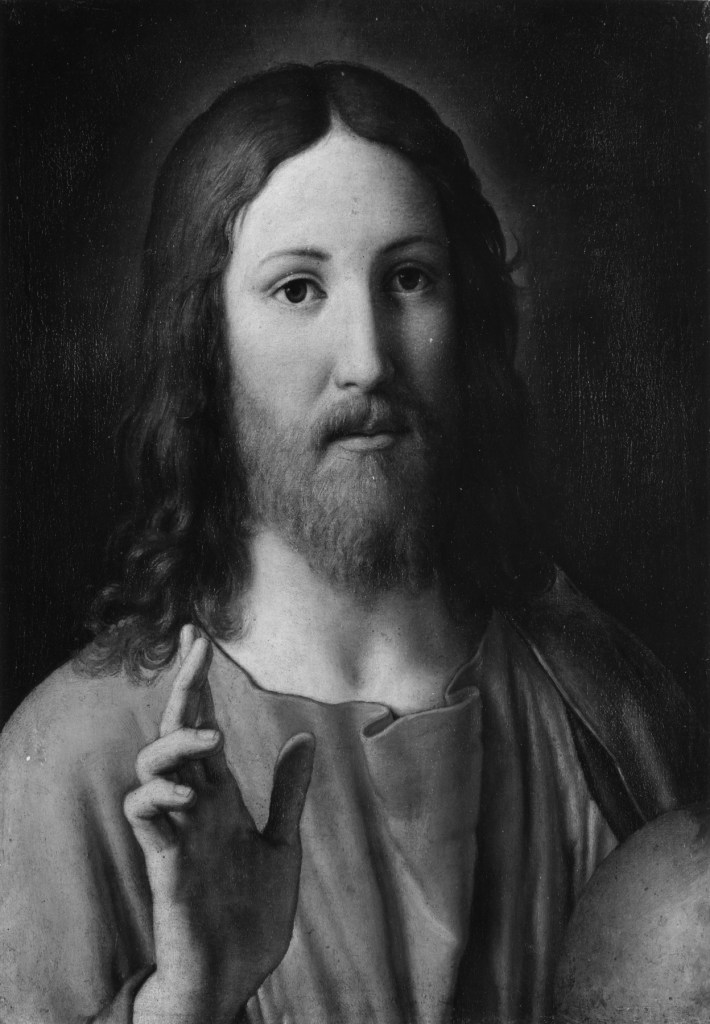
Our fearful, selfish human nature constantly tempts us to act in ways contrary to Your will. We are reminded to live faithfully by this prayer, taught by Your son Jesus, praying that Your will may remain always in our hearts, prompting us to follow the guidance of righteousness of Your eternal spirit.

Give Us This Day Our Daily Bread

We pray also that following your guidance may bring us the physical blessings of sustenance, shelter, health and safety. We believe our needs will be met as we conscientiously follow Your will.

And Forgive Us Our Trespasses…

For the times we have ignored Your guidance and have done harm to others, to ourselves and to Your world, in whatever ways we have, we ask to be able to be and to feel forgiven. Only the mercy of forgiveness will allow us to live in peace with others, and forgiving ourselves will help us do the work we must do to change for the better.

…As We Forgive Those Who Trespass Against Us

The fruit of forgiveness is peace. We seek release from negative, judgmental thoughts and feelings so that we may live free from memory of wrongs we have done and which we have suffered. Grant us relief from guilt and sorrow, from vengefulness and hostility, that we may continue to live in freedom and to do Your will.

Lead Us Not Into Temptation

May this prayer restore our obedience, granting us a sense of Your presence that remains with us throughout our daily lives, guiding our thoughts and our behavior in moments of crisis or temptation. May we have the grace to repeat it throughout our days, reminding us continually of our love for You.

But Deliver Us From Evil

May our awareness of You compel our minds and hearts to follow Your guidance , to gain the peace, kindness and abundance of spiritually-centered lives so that we may make Your world a better place for our having lived.

For Thine Is The Kingdom, The Power, and The Glory.

Dear Lord, I speak this prayer of affirmation with all my brothers and sisters here on earth. I love you with all my heart.

Amen
What Now

Words are the vehicles of thought. Some new ones, like “blog,” “influencer,” or “covid,” are lexical fast-food. Others have a more self-important sound, only vaguely defined. “Postmodern,” for example. This is meant to be a comparison of what is now (“post-,”) with what was modern some time ago. When? The Enlightenment? Darwin? Betty Crocker? How can there be a time after what is new?

Henri Bergson and Albert Einstein debated the nature of time in 1922. By all accounts Einstein, representing the new atomistic school, scored a TKO. Bergson, from the philosophic-metaphysical school, could not convince the audience that the passage of time (what he called durée,) was better understood in an emotional, spiritual context. Einstein stood for the currently accepted view and, like the electric toaster, his ideas sold.

A hundred years later Bergson’s version of time is more appealing. Time is development, an unfolding continuation of reality, every moment presenting differences in the essence and attributes of the universe. Now is not post-modern, it’s post-everything. The way we relate to the world is not the way our parents or our ancestors did; not the way our kids do. The conditions, the conscious reality of passing time is different to every person, every moment, every day, presenting new ideas, requiring new responses, new directions. Change may bring improvement; it may beckon a desire to return to the past. It may also make lessons of the past seem obsolete. Lessons like the finality of the atom or the wisdom of electric vehicles will become the new “Let there be light,” Noah’s ark, Jonah’s whale.

Humanity needs God. Otherwise we choose things, diversions, false gods. You can see it in our adulation of powerful leaders. To reassure humanity, to guarantee our future something has to happen to make religion a thing. Some way to make faith rational. Our materialistic, scientific ways of thinking have made sacred writings, the messages of myths and creeds seem quaint antiques or, worse, “articles of faith” which can hide ignorance or, worse, perpetuate hatred. It now seems to be a test of one’s intelligence whether to believe ancient human stories of creation, miracles or claims about the meaning of life from our sacred books. We live in a world without certainty. We need to explore what comes after post-modern.

How are we to conceptualize God in this new world? Not by going back to the old superstitions but to give the sacred old words a new context: to understand not with our intellects but with our emotional centers. To redefine intelligence. We have to think with our hearts. The time is now.

Jesus was a reformer who taught love, generosity, tolerance and forgiveness as the true message of the Tanakh, Hebrew scripture, what he referred to as “the law and the prophets.” There were few specifics to his theology. He described God not by recounting deeds, not in personal or physical terms, but by the qualities that constitute divinity. He taught us how to pray and how to behave. “Be ye perfect, even as your Father in heaven is perfect,” he said. Simple, but not easy. “I give to you a new commandment,” he said. “That you should love one another.” Nothing complicated, no formulaic religious duties nor even any specific creed. He believed his teaching would speak for itself. “By this all people will know that you are my disciples.”

He personified humility, never wrote anything down, never sought to be idolized, even telling his followers to keep quiet about who they thought he was. Jesus never asked to be considered anything but a “son of man.” He recognized, quoting Psalms, that we are “All gods, sons of the most high.” He never recommended any worship ceremony except, as we read in Paul’s epistle, “Eat this bread and drink this cup… In memory of me.” He did not have to start a new sect; his charisma was enough. Christianity is now, two thousand years later, a religion with over two-and-a-half billion adherents, one-third of the world’s population. Jesus is the most important person who ever lived.

The Gospels tell the story. The crucifix, the image of him crucified is a signpost, to “Bring all men to me.” His prescription for living is one of selflessness, leading to real value as living beings, to personal salvation from otherwise unfulfilled lives. Later followers established a church in his name, with sacraments, holy days, rules and regulations. These provide sanctified inspiration and perpetuate the messages of his teaching and his exemplary life. Like all human institutions, they have also been capable of cruelty and destruction.

Ultimately Jesus’s life and his teaching become real only in our hearts, in the spiritual centers of our being. Following his example, meditating on the Truth he taught, the miracles he performed, the generosity he personified, his willingness to sacrifice himself – this is Christianity. It is not necessary to understand God to live a God-centered life. Really there is no way to understand God, but we can see and feel God by being followers of Jesus, praying and acting as he taught us. The Gospels give us not concepts or ideas but life-long motivation, influencing our mentality, guiding our behavior.

A Reason To Believe

Harold Malamud was a generous, kind, thoughtful and unselfish man who lived a successful and not long but happy life, all the while while proclaiming to be an atheist. He was my father-in-law and Jennifer adored him, so we never discussed this. Also, he was pretty stubborn in his opinions. But his life proves one can live a full and rewarding life, be happy, have love and experience everything without ever making the choice to believe in something. So why bother?

I had to come to believe. For forty-five years I have been able to avoid drinking and drug use by calling on the “power greater than ourselves” suggested in AA’s second step. I had a necessary, practical reason to believe in a universal, life-sustaining power present in everything, a force that Gandhi defined as the “living power that is changeless, that holds all together, that creates, dissolves, and re-creates.” Some addicts and alcoholics do recover without professing any faith, but I think they believe in the life force in their hearts and not in their minds. Most atheists are rejecting the mythology and superstition, the dogmatism and preposterous failures of religious institutions that they think represent God. They’re justified in this. In the last five centuries the religion of science has won the contest of explaining life. Yet I believe Harold was missing something beautiful and meaningful that would have added to his happiness and his enjoyment of life itself.

Believing is simply a matter of making a decision; of coming to the conclusion that the universe, its very existence, and ours in it, is a sacred gift. It is not necessary to understand in order to believe; it is necessary to believe in order to begin to understand. It is a decision to be grateful and open-minded. Belief, or faith, is a fundamental desire to say Thanks. To spend some time in contemplation of the universal presence of the Giver rather than to arrive at any conclusions.

The unknowable is just that, and to be sure is to stop thinking. We are not supposed to do anything but to ask the sacred question: to seek to find the Name of the Giver and to invoke that name in our daily lives from moment to moment.